How to Choose a Reliable Washable Rug Manufacturer
Washable rugs have become an increasingly practical choice for modern homes, online retailers, furniture stores and home textile brands.
Compared with traditional rugs that may require professional cleaning, washable rugs are designed to make everyday maintenance easier while still offering a wide range of colors, patterns and textures.
For importers, wholesalers and private-label brands, however, choosing the right washable rug manufacturer involves much more than simply comparing prices.
Material selection, printing quality, backing construction, production capacity, customization capabilities, quality control and packaging can all influence the final product and customer experience.
In this guide, we explain some of the most important factors B2B buyers should consider when sourcing washable rugs.
1. Start with the Right Rug Material
Material is one of the first things to consider when developing a washable rug collection.
Polyester is commonly used for printed washable rugs because it can combine softness, design flexibility and practical maintenance.
Different surface constructions can also create very different appearances.
Depending on the target market and collection style, buyers may consider options such as:
- Chenille rugs
- Faux wool rugs
- Flannel rugs
- Faux silk rugs
- Shaggy rugs
- Jacquard rugs
- Outdoor rugs
- Short-pile printed rugs
At Kaili Carpet, multiple rug constructions and collections are available for different decorative and functional requirements.
For distributors and retailers, having access to multiple constructions makes it easier to build collections for different price levels, interior styles and customer groups.
2. Check Whether the Rug Is Truly Designed for Easy Cleaning
Not every rug marketed as washable offers the same construction.
A professional washable rug manufacturer should consider the complete structure of the rug, including the surface material, backing, edging and printing process.
For example, Kaili Carpet’s Chenille B washable rug uses a 100% polyester surface with a washable and anti-slip backing. The product is designed for areas including living rooms, dining rooms, bedrooms, kitchens and hallways.
For buyers, it is important to confirm washing instructions before placing a bulk order.
Questions may include:
- What washing temperature is recommended?
- Can the rug be machine washed?
- Is tumble drying recommended?
- What level of shrinkage should be expected?
- Does the backing remain stable after washing?
- Will the printed pattern maintain its appearance?
These details should be discussed during product development instead of after production begins.
3. Consider Foldable Rugs for E-Commerce
Packaging has become especially important for online rug sellers.
Traditional rugs can require large rolls or bulky packaging, which can increase storage and transportation requirements.
Foldable rug designs offer another option.
A foldable rug can be packed into a more compact carton, making the product easier to store, distribute and deliver through e-commerce channels.
Kaili Carpet highlights washable and foldable rug solutions as an important part of its current product range.
For Amazon sellers, online home furnishing stores and omnichannel retailers, packaging design should therefore be considered together with the rug itself.
Before confirming an order, buyers can discuss:
- Folded packaging dimensions
- Individual carton requirements
- Private-label packaging
- Barcode and label placement
- Shipping marks
- Retail-ready packaging
A well-designed packaging solution can make downstream fulfillment much more efficient.
4. Look for Strong Custom Design Capabilities
Design is one of the most important factors in the rug business.
Consumers often select rugs based on color, pattern and how well the rug fits a particular interior style.
For this reason, importers and retailers should look beyond existing designs when choosing a custom rug manufacturer.
A supplier with in-house design capabilities can help buyers develop collections for specific markets.
Common design directions may include:
- Persian-inspired rugs
- Vintage and distressed patterns
- Moroccan designs
- Modern minimalist styles
- Geometric patterns
- Floral designs
- Kids’ collections
- Seasonal collections
Kaili Carpet states that it maintains a large pattern library and develops new artwork regularly, while also supporting customized designs, private-label products and custom packaging.
This can be especially useful for wholesalers and brands that need product differentiation rather than purchasing the same designs available across the market.
5. Evaluate Printing and Color Performance
For printed rugs, design files are only part of the final result.
Printing quality directly affects how customers perceive the finished product.
When evaluating a printed rug supplier, buyers should pay attention to:
- Pattern definition
- Color consistency
- Detail reproduction
- Batch consistency
- Colorfastness
- Performance after washing
Before mass production, samples should be reviewed under realistic lighting conditions.
For private-label collections, buyers may also want to compare several colorways before confirming the final production design.
A professional manufacturer should be able to work with buyers throughout the sample-development and approval process.
6. Ask About Anti-Slip Backing
Backing is particularly important for washable area rugs.
A rug may look attractive from the front, but poor backing can affect stability and everyday usability.
Anti-slip backing can help provide additional grip on suitable indoor flooring and makes the rug more practical for frequently used areas.
When evaluating backing options, buyers should consider:
- Surface grip
- Flexibility
- Washability
- Overall rug weight
- Folding performance
- Compatibility with the intended flooring
The right backing specification will depend on the product positioning and target market.
7. Review the Manufacturer’s Production Capacity
Reliable supply becomes increasingly important when a product performs well in the market.
Retailers need to know whether a supplier can support repeat orders and larger volumes without significantly changing product quality.
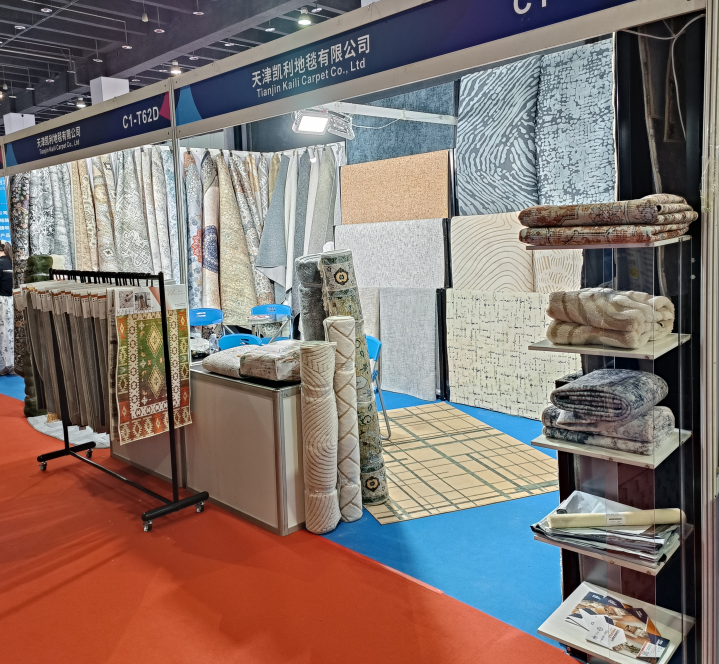
Tianjin Kaili Carpet Co., Ltd. was founded in 1999 and operates its rug manufacturing business from Tianjin, China. According to the company’s published information, its manufacturing facility covers approximately 18,000 square meters and its annual production capacity exceeds 8.8 million square meters.
For wholesale buyers, production capability matters because it can affect:
- Bulk order planning
- Repeat-order stability
- Collection expansion
- Seasonal purchasing
- Multi-design orders
- Long-term supply cooperation
Buyers should discuss expected quantities and production requirements directly with the manufacturer before confirming an order.
8. Check Quality Management and Certifications
Certification requirements vary according to product type, destination market and customer.
Before importing rugs, buyers should determine which standards or documentation are required for their own market.
Kaili Carpet lists certifications and related qualifications including ISO9001, OEKO-TEX, REACH, GRS and BSCI among its company credentials.
Importers should still confirm which certification applies to the specific rug, material or order they plan to purchase.
This is especially important when products will be sold through major retailers, chain stores or markets with specific compliance requirements.
9. Choose a Manufacturer That Supports Custom and Private-Label Projects
Many B2B buyers do not simply need a standard rug.
They need a product that fits their own brand positioning.
A private label rug manufacturer may support customization in areas such as:
- Rug patterns
- Colors
- Sizes
- Surface materials
- Backing
- Edge finishing
- Labels
- Packaging
- Collection development
Before starting a custom project, buyers should prepare a clear product brief.
This may include the target market, preferred material, dimensions, design style, packaging format and expected order quantity.
The more information provided at the beginning of the project, the easier it is for the manufacturer to recommend an appropriate solution.
10. Request Samples Before Bulk Production
Samples are an essential part of rug sourcing.
Photos and digital renderings are useful for early communication, but physical samples allow buyers to evaluate the actual product.
When checking samples, pay attention to:
- Surface texture
- Color
- Pattern clarity
- Edge finishing
- Backing
- Thickness
- Weight
- Folding recovery
- Washing performance
If the rug will be sold under a private label, packaging and labeling samples should also be checked before mass production.
Sample approval creates a clearer quality reference for both the buyer and manufacturer.
Why Work with Kaili Carpet?
Kaili Carpet is a carpet and rug manufacturer located in Tianjin, China, supplying rugs and related products to international customers.
The company’s current product portfolio includes washable rugs, chenille rugs, faux wool rugs, shaggy rugs, jacquard rugs, outdoor rugs and other decorative rug collections.
For wholesale, retail and private-label projects, Kaili Carpet can support buyers looking for different rug constructions, patterns and product concepts.
From design development and sampling to manufacturing and bulk supply, working directly with a rug factory can help buyers create collections that better match their target markets.
Looking for a Custom Washable Rug Manufacturer?
If you are sourcing wholesale washable rugs, developing a private-label collection or looking for a long-term rug manufacturing partner, choosing the right supplier is an important part of building a competitive product range.
Consider materials, washability, design capabilities, backing construction, quality management, production capacity and customization services before making your decision.
Kaili Carpet offers a variety of rug collections and customization possibilities for international B2B customers.
Contact Kaili Carpet to discuss your rug specifications, designs, samples and wholesale requirements.
FAQ
What materials are commonly used for washable rugs?
Polyester is commonly used for washable printed rugs because it works well with different surface constructions and printed designs. The exact material should be selected according to the required texture, appearance and product positioning.
Can washable rugs be customized?
Yes. Custom rug projects may include patterns, colors, sizes, construction, labels and packaging. Available options should be confirmed with the manufacturer according to the specific project.
What should I check before ordering wholesale rugs?
Buyers should evaluate materials, dimensions, backing, printing quality, edge finishing, washing requirements, packaging and applicable certification requirements.
Are foldable rugs suitable for online retail?
Foldable rugs can be particularly useful for e-commerce because compact packaging may simplify storage and distribution compared with traditional rolled rugs.
How do I start a private-label rug project?
Prepare your target sizes, styles, expected quantity, design references and packaging requirements, then discuss sampling and production details with the rug manufacturer.